 RIisk Management
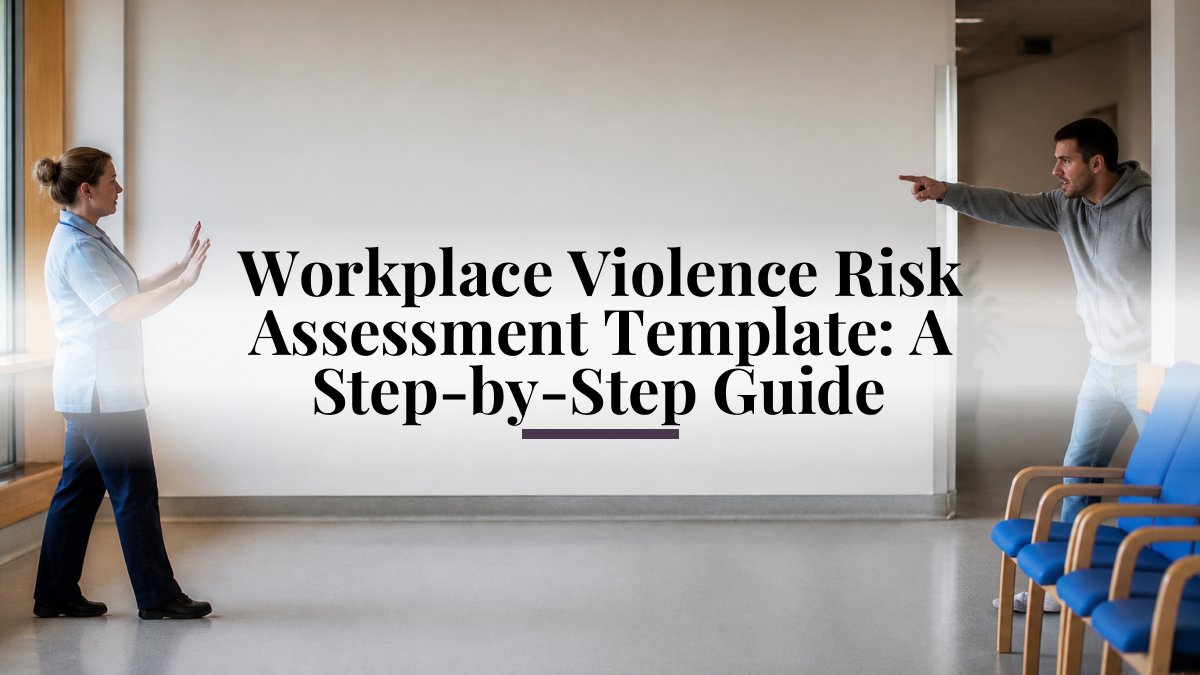
Workplace Violence Risk Assessment Template: A Step-by-Step Guide
Table of Contents
- What Is a Workplace Violence Risk Assessment?
- Workplace Violence Risk Factors to Evaluate
- Building Your Workplace Violence Risk Assessment Checklist
- Step-by-Step: How to Conduct the Assessment
- Workplace Violence Risk Assessment Examples from Real Settings
- Workplace Violence Incident Reporting Procedure and Follow-Up
- Turning Assessment Findings into Action
- Conclusion
- Frequently Asked Questions
Last Updated: 10 October 2026
What Is a Workplace Violence Risk Assessment?
A workplace violence risk assessment is a systematic process for identifying, evaluating, and prioritising threats of violence in your organisation. It examines the environments, situations, and factors that could lead to aggressive incidents involving staff, service users, or the public.
This assessment forms the foundation of any credible safety strategy. Rather than guessing where problems might occur, you gather evidence. You analyse patterns. You build a clear picture of your actual risk profile. At Personal Safety Partnership Ltd., we've worked with organisations across healthcare, education, and care settings to develop assessments that are grounded in real workplace data.
The goal is straightforward: understand your risks so you can act on them. A proper assessment prevents incidents before they happen. It also protects your organisation legally by demonstrating due diligence.
Workplace Violence Risk Factors to Evaluate
Several key factors influence violence risk in any workplace. Understanding these helps you spot where problems are most likely to emerge.
Environmental factors matter significantly. Overcrowding, poor lighting, limited exits, and inadequate staffing all increase tension. Lone workers face particular vulnerability. Environments where service users are distressed, intoxicated, or in crisis naturally carry higher risk.
Organisational factors include your incident reporting systems, staff training gaps, and communication breakdowns. If staff don't report near-misses, you're flying blind. If conflict management training is outdated or absent, staff lack the tools to de-escalate early.
Individual factors involve recognising warning signs in behaviour. Verbal aggression, sudden mood changes, clenched fists, and pacing often precede physical incidents. Previous violent behaviour is a strong predictor of future incidents.
Situational triggers vary by setting. In healthcare, aggressive patients may stem from pain, confusion, or medication effects. In education, student frustration or peer conflict can escalate. In care settings, residents with dementia or challenging behaviour present specific risks.
Building Your Workplace Violence Risk Assessment Checklist
Your checklist becomes the practical tool your team uses during the assessment. It should be specific to your setting, not generic.
A strong checklist includes:
- Current incident frequency and severity
- High-risk areas (reception, isolated rooms, outdoor spaces)
- High-risk times (shift changes, busy periods, late hours)
- Staff roles most exposed to violence
- Existing control measures and their effectiveness
- Communication systems during incidents
- First aid and support procedures post-incident
- Staff training records and gaps
- Physical security measures (alarms, cameras, locks)
- Reporting and follow-up processes
Keep your checklist practical. If it's too long or technical, staff won't use it properly. Aim for a single page that your team can complete without confusion.
Step-by-Step: How to Conduct the Assessment
Conducting the assessment properly requires structure and participation. Here's how to do it systematically.

Step 1: Gather Your Team
Assemble a group that represents your whole organisation. Include frontline staff, managers, health and safety representatives, and anyone responsible for incident reporting.
Frontline staff see patterns that management misses. They know which times and places feel unsafe. Their insights are invaluable. A diverse team also builds buy-in, staff trust assessments they've helped shape.
Step 2: Collect Incident Data
Review your incident reports from the past 12-24 months. Look for patterns: which staff members were involved, what triggered the incidents, where they occurred, what time of day.
If your reporting system is weak, start there. Poor data means poor assessment. Encourage staff to report near-misses, not just serious incidents. A verbal threat today might become a physical assault tomorrow.
Step 3: Map High-Risk Areas and Times
Plot your incidents on a simple grid. Note location and time of day. Patterns emerge quickly. You'll see if violence clusters in specific areas or during particular shifts.
This visual mapping helps your team see risk objectively. It also guides where you'll place resources, better staffing, alarm systems, or additional training.
Step 4: Score and Prioritise Risks
Assign each identified risk a score based on likelihood and potential impact. A simple scale works: low, medium, high. This forces prioritisation. You can't fix everything at once, so focus on what poses the greatest threat.
Workplace Violence Risk Assessment Examples from Real Settings
Real examples show how assessments work in practice. Different settings face different challenges.
Healthcare Settings
In hospital wards and accident and emergency departments, violence often stems from patient distress, pain, or confusion. An assessment might reveal that verbal aggression peaks during handover periods when staffing is thin and communication breaks down.
Control measures could include improved handover protocols, additional staff during peak times, or de-escalation training focused on managing distressed patients. Personal Safety Partnership Ltd. has supported organisations in developing conflict management strategies tailored to high-pressure clinical environments.
Education Settings
Schools and colleges face violence from student frustration, peer conflict, or external threats. An assessment might identify that incidents cluster in unsupervised areas or during unstructured time.
Responses include better supervision protocols, clear behaviour expectations, and staff trained in recognising early warning signs. Early intervention prevents escalation.
Care and Support Settings
In residential care and support services, violence may relate to service users with challenging behaviour, dementia, or complex needs. An assessment reveals which times and activities trigger incidents.
Tailored responses might include modified activity schedules, additional staffing during high-risk periods, or specialist training in managing specific behaviours.
Workplace Violence Incident Reporting Procedure and Follow-Up
Assessment findings mean nothing without a strong reporting system and genuine follow-up.
Your procedure should be simple enough that staff report incidents promptly. Include what happened, who was involved, where, when, and what triggered it. Capture both serious incidents and near-misses.
After reporting, act. Review the incident with the staff member involved. Identify what worked and what didn't. Provide support, psychological first aid, counselling referral, or time off. Staff who feel abandoned after an incident lose confidence in your safety systems.
Track patterns over time. If the same issue keeps appearing, your control measures aren't working. Adjust them.
Turning Assessment Findings into Action
An assessment sitting on a shelf helps no one. Your real work begins after you've identified risks.
Prioritise high-risk findings. Create an action plan with clear owners and deadlines. Communicate progress to staff. If you've identified staffing gaps, recruit. If training is lacking, deliver it. If physical security needs improvement, invest.
Involve your team in solutions. Staff who help design control measures are more likely to use them. Their practical knowledge prevents you from implementing measures that sound good but don't work in reality.
Review and update your assessment annually or after significant incidents. Violence risk isn't static. New staffing, new service users, or changes to your environment shift your risk profile.
Personal Safety Partnership Ltd. offers conflict management training and de-escalation strategies designed to support the control measures you've identified through your assessment. Tailored training helps your team respond effectively to the specific risks your workplace faces.
Conclusion
A workplace violence risk assessment transforms abstract concerns into concrete, manageable actions. It shows staff that you take their safety seriously. It protects your organisation by demonstrating systematic risk management. It provides the evidence base for targeted interventions that actually work.
Start with your team. Gather your data. Map your risks. Score them honestly. Then act on what you've found. The assessment itself isn't the goal, safer, more confident staff is.
Frequently Asked Questions
What should a workplace violence risk assessment include?
A thorough workplace violence risk assessment covers incident history, environmental hazards, staffing levels, training gaps, and vulnerable areas. It should identify who is at risk, when incidents are most likely, and what triggers conflict. Your assessment template must capture current control measures, staff confidence levels, and reporting processes. The goal is a complete picture of your organisation's violence risks so you can prioritise interventions where they matter most.
What are the main workplace violence risk factors to evaluate?
Key workplace violence risk factors include lone working, high-stress environments, contact with vulnerable or distressed individuals, inadequate staffing, poor lighting or access control, and lack of de-escalation training. Organisational factors matter too: unclear incident reporting, high staff turnover, and weak management response all increase risk. Environmental design—exits, alarm systems, panic buttons—shapes risk. Your assessment must weigh all these factors specific to your setting, not generic checklists.
How often should a workplace violence risk assessment be reviewed?
Review your assessment annually as a minimum, or after any serious incident, staffing change, or environmental modification. High-risk settings—secure units, emergency departments, or acute mental health wards—benefit from six-monthly reviews. Trigger reviews when you notice patterns in incident reports, staff turnover spikes, or new roles introduced. Regular review keeps your assessment current and shows regulators you take duty of care seriously.
Who should be involved in conducting a workplace violence risk assessment?
Involve health and safety leads, frontline staff who face violence daily, managers from each area, and occupational health representatives. Staff experience is invaluable—they know where real risks hide. Include union representatives if present. For specialist environments like secure units or emergency departments, consider external consultants with sector expertise. A cross-functional team produces a credible, comprehensive assessment that staff will trust and act on.